
Recent Search
Popular Searches


Risk aversion was the dominant theme in the first part of last week following the events in Iraq, but with de-escalation of the tension between the US and Iran at the end of it, risk appetite resurfaced. This reversal in sentiment helped oil prices decline from the highs reached earlier in the week, while developed equity markets and US Treasury yields finished the week higher, along with the dollar.
The improved tone at the start of this week should get further support from the expected signing of a phase one trade deal between the United States and China on Wednesday. However, the limited scale of the deal in conjunction with existing tariffs still being in place highlight the likelihood that the economic environment will remain challenging.
After a number of sluggish manufacturing activity surveys the US December jobs data on Friday showing the labour market losing momentum was a reminder that the US cannot afford the trade dispute to flare up again. Non-farm payrolls rose just 145k last month and while the unemployment rate remained at 3.5%, average hourly earnings rose by just 0.1% m/m and 2.9% y/y, the smallest amount since 2018.
For the Fed the message from the employment report was that while the labour market remains tight, it is still not tight enough to put upward pressure on earnings. In this it is likely to reinforce the message from the minutes from the Fed’s December meeting which displayed a dovish consensus to keep rates steady for 2020.
The coming week also brings a lot of data in the U.S. and abroad. The U.S. calendar includes a number of top tier reports including manufacturing output, retail sales, and inflation. It is also the start of corporate earnings season. In Asia, China's Q4 GDP will be released with a slight stabilization in activity anticipated. Europe's economic data is mainly secondary in nature although Germany’s full year GDP will be seen which is expected to fall back to 0.6% y/y in 2019 from 1.5% in 2018. UK survey data has mostly been encouraging since the start of the year and since the Conservative election victory in December and if this continues Q1 activity should see some improvement. Although the BOE governor Carney made more dovish comments last week, dampening the GBP, a GDP bounce in Q1 could reduce the need for a BOE cut.
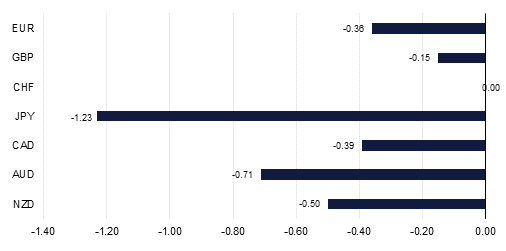
Source: Emirates NBD Research


 Emirates NBD Research