
Recent Search
Popular Searches


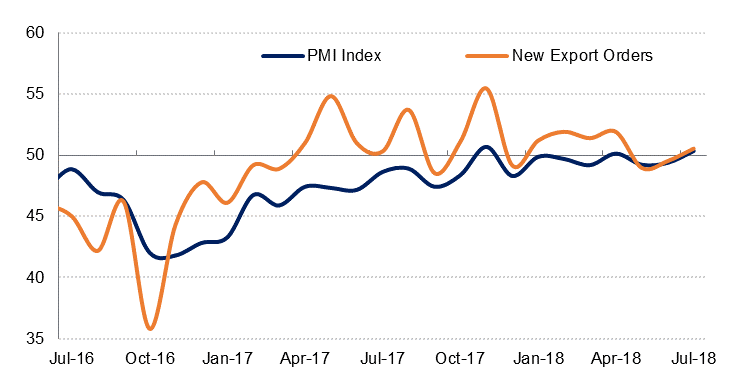
The Emirates NBD Purchasing Managers’ Index for Egypt hit an eight-month high of 50.3 in July, exceeding the neutral 50.0 level which delineates contraction and expansion in the non-oil private sector for only the third time since 2015. This compares to a 2017 average of 47.5 and a H1 2018 average of 49.6. The positive reading for the first month of the new fiscal year supports our view that real GDP growth will strengthen in 2018/19 as there is a greater recovery in the private sector, supported by gradual monetary policy normalisation, improved political stability and a rebound in the tourism sector.
Although output remained contractionary at 49.3, it improved on the 2018 low of 48.2 recorded in June despite reported shortages in raw materials. Another factor respondents cited as weighing on output were increased costs, and these were also reflected in input prices. The implementation of new subsidy cuts has seen electricity costs for factories rise by 42.0% and petrol by as much as 50.0%, and these have fed through to the PMI data; input costs rose from 59.3 in June to 76.5 in August, the highest level since the last round of subsidy cuts at the start of the previous fiscal year in July 2017. As output prices rose from 54.2 to 57.0, the highest level since last August, some of these costs have been passed on, but firms’ margins remain under pressure, as evidenced by the 38th consecutive month of sub-50 employment. That being said, at 49.8 this represented the slowest pace of job-shedding since mid-2015.
Boding well for output over the next several months, both new orders and new export orders were positive, at 51.2 and 50.5 respectively. Respondents cited a recovery in the tourism sector - visitor numbers were 8.3mn in 2017, y/y growth of 57.3%, and the ministry of tourism expects this number to be exceeded this year. Future output expectations among firms remains generally positive at 63.7, with 82.0% of respondents expecting that output will be the same or higher in 12 months’ time. However, the number of firms believing that this is as good as it gets has risen sharply, with 18.0% now expecting weaker output next year compared to 9.3% in June.
 Daniel Richards

 Facebook
 Twitter
 Linkedin
 Email
Email